The British trades of opium with China started the world's very first drug war. Opium is a preparation made from the juice of poppy seedpods - used to produce heroine. This drug was very highly addictive, and many Chinese citizens were hooked on it. Before long, opium was becoming s big problem in China. Roughly 10% of the Chinese population was addicted to opium. It became a health factor, and it effected their economy. China later prohibited opium, but the British still brought it into the country. China actually accepted bribes from the British.
China was threatening to end ALL trades with Britain. After all, they were an isolated country. But the British didn't want it to end. The only thing they could think of was war. China started an anti-opium campaign, and the British wanted it to end. In 1840, British gunboats attacked the coastline of China. Also, China was behind when it came to modern weapons. Eventually, China was defeated, and was forced to sign the Treaty of Nanjing; which held the Chinese government responsible for all of the opium destroyed during the anti-opium campaign. Basically, the British won the war; mainly because of their advanced weapons and surprise attack. China was unprepared for the war, therefore they lost.
Wednesday, December 10, 2008

Wednesday, December 3, 2008
Mountains of the Moon.
The Europeans faced several hardships as they explored Africa. Diseases like Malaria were deadly, and the Europeans had no cure for it at that time. Another problem was a lack of geographical boundaries. They had no maps, so they weren't exactly sure where they were going. Also, since the Africans had never seen white people before, some decided to attack the Europeans. They brought some goods and resources to show that they came in peace. Another factor was sleeping in the wilderness. Like in the movie, when the bugs were all over their tents; biting them, and even giving them sicknesses and diseases.
It is strange that Lake Victoria is named after a British Queen, because the Lake is located in Africa. It doesn't make any sense, because the British didn't discover the lake since there was already people living there. You can argue that it does make sense, because Africa had no specific boundaries or border lines. Even today, Africa's countries are mapped out by the British. But then again, you shouldn't be able to name something after your queen if you didn't discover it. It is also strange that the lake is still named Lake Victoria today.
The Europeans had clear technological advances compared to the Africans. The Europeans had magnifying glasses, telescopes, advanced weapons such as guns, etc. The Africans were even surprised to see a white human, let alone their resources, weapons, and goods. The latest weapon the Africans had at that time was the spear. The Europeans had more advanced and developed technology.
The Europeans were eventually able to conquer Africa easily because of their invention of the machine gun. The Africans were surprised from a basic handgun. The machine gun would make it ten times easier to kill people. This allowed the Europeans to easily overtake Africa and conquer it. The Africans had no defense whatsoever. There was no chance of stopping the Europeans from invading and taking over their land.
It is strange that Lake Victoria is named after a British Queen, because the Lake is located in Africa. It doesn't make any sense, because the British didn't discover the lake since there was already people living there. You can argue that it does make sense, because Africa had no specific boundaries or border lines. Even today, Africa's countries are mapped out by the British. But then again, you shouldn't be able to name something after your queen if you didn't discover it. It is also strange that the lake is still named Lake Victoria today.
The Europeans had clear technological advances compared to the Africans. The Europeans had magnifying glasses, telescopes, advanced weapons such as guns, etc. The Africans were even surprised to see a white human, let alone their resources, weapons, and goods. The latest weapon the Africans had at that time was the spear. The Europeans had more advanced and developed technology.
The Europeans were eventually able to conquer Africa easily because of their invention of the machine gun. The Africans were surprised from a basic handgun. The machine gun would make it ten times easier to kill people. This allowed the Europeans to easily overtake Africa and conquer it. The Africans had no defense whatsoever. There was no chance of stopping the Europeans from invading and taking over their land.
Tuesday, November 18, 2008
The Meiji Restoration of Japan.
Matthew Perry arrived on the coasts of Japan to 'negotiate', but he was actually tricking them. Japan was an isolated country, and they didn't want to trade with anyone. The British and the United States wanted a friendly Pacific port, where trading would take place. Commodore Perry wasn't negotiating, as much as bulling Japan. Japan hadn't seen anything like it before.
The United States bullied Japan through a display of military might. Perry brought an impressive naval force to Japan. The Japanese were amazed that their ships had no sails. Perry intentionally did this, to show Japan how advanced the United Sates were. These ships impressed the Japanese. Also, on March 31, 1854, a trading treaty was signed. The treaty meant that Japan would open two ports for trading.During the 'Meiji Era', Japan had became industrialized. This was because the country was introduced to trading. Japan was now being exposed to other goods and resources. Their government expanded, and their country became modernized. Japan was an archipelago, which meant that their country was made up of a chain of islands. This was an advantage to them because they had many ports which lead to an impact on their economy.
Thursday, November 6, 2008
Karl Marx and Communism.
Karl Marx's idea of communism changed the way people lived. The Communist Manifesto (a famous work published in 1848) set principals in which communism was supposed to evolve from. Marx wanted communism to take over the world for the better. There would be a classless society. The Industrial revolution came with low wages, dangerous working conditions, and pollution. Marx saw that factory owners were getting more and more rich, whereas the workers stayed poor.
To Karl Marx, the good guys were the factory workers, and the bad guys were the owners. The workers were doing nothing wrong, there was just too many of them. But that's the point. Since there were so many more workers than owners, why should they be treated the way they were? The owners were the bad guys because they received most of the money, and they weren't the ones working. Communism would change all of this. Everyone would make the same amount of money, and no one would be able to own property. Everything belonged to the government.
To Karl Marx, the good guys were the factory workers, and the bad guys were the owners. The workers were doing nothing wrong, there was just too many of them. But that's the point. Since there were so many more workers than owners, why should they be treated the way they were? The owners were the bad guys because they received most of the money, and they weren't the ones working. Communism would change all of this. Everyone would make the same amount of money, and no one would be able to own property. Everything belonged to the government.
Wednesday, November 5, 2008
Karl Marx and the Industrial Revolutuion.
Karl Marx did not like the Industrial Revolution. He felt that the workers should have more power than they did. Since there were alot more workers than owners, why shouldn't they? He wanted to start a revolution, hence the quote 'Workers of the world unite.' The working conditions in the factory were harsh and dangerous. The pollution shortened people lives who lived nearby. Marx had a theory that the only way there was going to be a change of power, was by a revolution. Marx invented a new system called communism. This theory is also known as Marxist Dialectic.
The Industrial revolution influenced him to invent communism, an improved and classless society. However, it wasn't for the benefits of everyone. Mostly just the factory owners. Marx saw that the Industrial Revolution was making the rich richer, and the poor poorer. He didn't like the fact that there were tons more workers than owners, and that the workers had extremely low wages. His idea of communism would have everyone working for the same amount of money, and society would produce only what it needed. Also, he thought that everything should be owned by the government, and that no one could have private ownership of anything.
The Industrial revolution influenced him to invent communism, an improved and classless society. However, it wasn't for the benefits of everyone. Mostly just the factory owners. Marx saw that the Industrial Revolution was making the rich richer, and the poor poorer. He didn't like the fact that there were tons more workers than owners, and that the workers had extremely low wages. His idea of communism would have everyone working for the same amount of money, and society would produce only what it needed. Also, he thought that everything should be owned by the government, and that no one could have private ownership of anything.
Thursday, October 16, 2008
Simon Bolivar and Latin American Revolutions
Simon Bolivar is a famous military leader. It was because of him that many South American countries were set free from Spain. Simon Bolivar was born in Venezuela. He received a decent education after the death of his parents. He was also schooled in Spain, and traveled through Italy and France. There he became inspired by enlightenment thinkers, such as John Locke. He also traveled to the US. The United States convinced him that his nation needed changes as well.
On July 5th, 1811, Simon started a revolution that led to Venezuela's independence. After Venezuela was freed from Spain's ruling, Simon continued to reinforce his army and military power. He controlled more and more countries over time. Then, he established the Republic of Colombia, where he was president. He then continued to free more country's in South America, and by the end freed Colombia, Peru, Ecuador, and Bolivia. Simon Bolivar is considered a great revolutionary hero for South America. He liberated almost all of South America from Spain's control. However, he was not as good a political leader than he was a military leader. His Government rule was unbalanced, and there were many civil wars in his own countries. A civil war is a war where both sides are part of the sam country. Simon Bolivar was considered the 'George Washington' of South America.
On July 5th, 1811, Simon started a revolution that led to Venezuela's independence. After Venezuela was freed from Spain's ruling, Simon continued to reinforce his army and military power. He controlled more and more countries over time. Then, he established the Republic of Colombia, where he was president. He then continued to free more country's in South America, and by the end freed Colombia, Peru, Ecuador, and Bolivia. Simon Bolivar is considered a great revolutionary hero for South America. He liberated almost all of South America from Spain's control. However, he was not as good a political leader than he was a military leader. His Government rule was unbalanced, and there were many civil wars in his own countries. A civil war is a war where both sides are part of the sam country. Simon Bolivar was considered the 'George Washington' of South America.
Nationalism and the Creation of Italy.
Nationalism is a huge part of our lives. In modern times, everyone is so familiar with nationalism, that they take it for granted. If an American gets lost in a completely different place like China, then that person would be clueless. If that person was me, i would be desperate to come into contact with another American. In America, we share a common language, currency, history, religion, and culture. Nationalism is everywhere around us, but once we surpass a certain border-line, everything changes! However, that not how things were about a century ago...
Even though nationalism destroyed nations, it also built new ones. Italy was one of the first nations formed this way. Italians were tired of having foreign rulers, and they wanted a change in their nation. In 1832, Giuseppe Mazzini organized a nationalist group called 'Young Italy'. By 1848, he was droven to exile. Italy used to be made up of city states that were ruled by Austria. Eventually, Italians no longer wanted to live under foreign rulers. They came together and fought for what they wanted and won. This is early evidence of nationalism.
Even though nationalism destroyed nations, it also built new ones. Italy was one of the first nations formed this way. Italians were tired of having foreign rulers, and they wanted a change in their nation. In 1832, Giuseppe Mazzini organized a nationalist group called 'Young Italy'. By 1848, he was droven to exile. Italy used to be made up of city states that were ruled by Austria. Eventually, Italians no longer wanted to live under foreign rulers. They came together and fought for what they wanted and won. This is early evidence of nationalism.
Tuesday, September 23, 2008
Robespierre and The Reign of Terror.
 The Reign of Terror is a period of violence that occur ed shortly after the French Revolution. (9/5/93 - 7/28/94). During this chaotic period of time, thousands of people were murdered. In fact, the estimated amount is from 16,000 - 40,000. The guillotine was a common form of death. The guillotine is a killing device, where the victims lay their heads in a specific spot. Then, usually with the cutting of a rope, a razor sharp blade comes down and slices your head off. The designers thought that this killed you instantly, but many people believed that your corpse is alive a few moments after.
Maximilien Robespierre was mostly involved. His aim was to raise newer, stronger armies, and to assure food for them. The support from Paris was essential to his plan. Robespierre ruled France like a dictator. He changed the calender, the days of the week, and even the faces of kings and queens on playing cards. Eventually, everyone was scared that they were next to die, so Robespierre was arrested, and later killed by the guillotine.
Monday, September 22, 2008
The French Revolution.
1) a- The Nobility.
The peasants were most critical to the nobles because they had almost complete control over them. The peasants were very mad and thought that they had no right to take control over them. They believed that man is born free, and no one has natural authority over them.
b- The King.
The king had the best life. He ruled with absolute power, and no one could tell him what to do. He had complete authority over France.
c-The Clergy.
The Clergy were similar to the nobles. They usually lived in great luxury in chateaux and
palaces. They didn't really have to pay taxes, and so people in France were critical to them.
2) Most French peasants were overwhelmed with taxes, especially around 1787-1790. They had to pay almost ten times what they had. One small article says that a woman and her husband owned a small piece of land. They only owned one cow and a poor horse, but had to pay 20Kg of wheat, three chickens, 60Kg of oats, and much more.
3) The authors point was that peasants had most of the work to do. The cartoon shows a peasant carrying the burden of maintaining the feudal lords and the clergy. The person carrying the other two people is a peasant. The people the peasant is carrying represent the feudal lords and the clergy. the caption, "One hopes this will end soon," is important because its showing that the peasants are desperate for a change. They don't want everyone else to have all the power.
4) It is clear that source B shows the downside of a French peasants life. (If there are any good sides) Source B explains that the peasants were taxed heavily, and most couldn't even keep up with them. This particular person owned a small amount of land, and only a cow with a poor horse. He was being taxed way more than what he had. The quote at the end, "The taxes and feudal dues are crushing us," means that they can barley survive with these taxes.
5) Sources A, B, and C do explain why poor people resented the rich because all of them show how hard life is from a peasants point of view. For example, source C shows that all of the people in the higher classes get a yearly income, some more than others. But, the peasants don't make any money.
6) Rousseau was an influential writer during his time. Along with other writers like Voltaire, he wanted a direct democracy government. The peasants were instantly influenced by his writing. Peasants lived a desperate and cruel life. They were taxed to the extent where they weren't able to survive. The wealthy classes ruled over everyone, while in Rousseau's pamphlet he states that power to make laws belongs to the people. He disliked the current government, and so did most of the peasants.
7) The pamphlet made from Rousseau was banned in 1775. It was banned because it opposed the way the government was. The pamphlet influenced peasants, caused a revolt against the government. The wealthy estates would lose their money, power, luxury, and privileges.
Thursday, September 18, 2008
The Enlightenment.
The most known, or most famous thinker of the Enlightenmen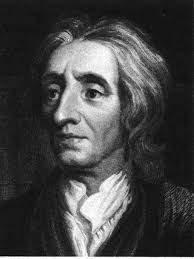 t, was definitely John Locke. Locke had made a huge influence on our government today. He inspired Thomas Jefferson when we wrote the Declaration of Independence. Some of the basic rights were the following; All men are created equal, Life, Liberty, and the pursuit of happiness. Citizens are born with these rights, and no one can take them away from you, no matter what. "Whenever any Form of Government becomes destructive of these ends, it is the Right of the People to alter or to abolish it." This statement means that if anyone tries to go against your rights, then you have the right to fight back.
One reason why the government has the amount of power it does today, is because it actually works out. Everything is balanced, and runs in a smooth cycle. Locke is the reason for this, because he came up with ideas that eventually effected everyone. The government today gets its power from the people, hence our type of government, democracy. Most importantly is voting. We have the right to vote. Since we have the right to vote, then its basically our choice who runs our government, and who gets to have the power.
t, was definitely John Locke. Locke had made a huge influence on our government today. He inspired Thomas Jefferson when we wrote the Declaration of Independence. Some of the basic rights were the following; All men are created equal, Life, Liberty, and the pursuit of happiness. Citizens are born with these rights, and no one can take them away from you, no matter what. "Whenever any Form of Government becomes destructive of these ends, it is the Right of the People to alter or to abolish it." This statement means that if anyone tries to go against your rights, then you have the right to fight back.One reason why the government has the amount of power it does today, is because it actually works out. Everything is balanced, and runs in a smooth cycle. Locke is the reason for this, because he came up with ideas that eventually effected everyone. The government today gets its power from the people, hence our type of government, democracy. Most importantly is voting. We have the right to vote. Since we have the right to vote, then its basically our choice who runs our government, and who gets to have the power.
Friday, September 12, 2008
Copernicus and the trial of Galileo.
The Solar System has two theories to it. One theory was the Heliocentric theory. This stated that the sun was located at the center of the solar system. Opposed to this theory was the Geocentric theory, which stated that the Earth was the center of the solar system. At first, everyone believed in the Geocentric theory because it came first. It seemed pretty obvious, because everything in the sky would rise and set, or go around the Earth. It wasn't until the 16th century, when scientists were actually proving this theory wrong. Copernicus presented a mathematical model of the Heliocentric theory. The Heliocentric theory came out of the scientific revolution, where Copernicus studied the movements around the Earth. He came to a conclusion that Earth was only one of a number of planets that are orbiting around the sun. Sure enough, there were big disputes between the two theories, and even sparked a major court case known as the "Trail of Galileo."

The trial was held in 1633 at the Inquisition building. The Catholic church put Galileo on trial because he was teaching things that they didn't believe in, and were against the catholic religion. Galileo believed in the heliocentric theory, and that the Earth was not the center of the universe. The Catholic church was against this because they believed that the Earth was in the center, as stated in the bible. The catholic church won the trial, and Galileo was put on house arrest. He then suddenly went blind, and died shortly after in 1642.
The trial was held in 1633 at the Inquisition building. The Catholic church put Galileo on trial because he was teaching things that they didn't believe in, and were against the catholic religion. Galileo believed in the heliocentric theory, and that the Earth was not the center of the universe. The Catholic church was against this because they believed that the Earth was in the center, as stated in the bible. The catholic church won the trial, and Galileo was put on house arrest. He then suddenly went blind, and died shortly after in 1642.
Thursday, September 11, 2008
Scientific Revolutiuon
Before 1500, people had no standard way of finding answers for scientific questions. Some searched for answers in the bible, while others got their ideas from ancient Greeks and Romans. Either way, there was no simple process to figure something out before the scientific revolution occurred. One example is the location of the Earth. Based on religion and the bible, people thought that the Earth was the center of the universe, and that all the other planets revolved around it. However, scientists proved that to be wrong.
Another early experiment of the scientific revolution was the theory that heavy objects fall faster than lighter objects. Aristotle, the founder of the theory, was proven wrong about 1,500 years. Then came along a young Italian named Galileo. Galileo tested his theory by dropping different sized stones off the top of the Leaning Tower of Pisa. Sure enough, they all fell at the exact same rate, and hit the floor at the same time.

One of the most popular and common used methods today, is the Scientific Method. There are many good sides to this method. For example, it is unprejudiced. No one is forced to believe in any scientists results or conclusions. Anyone can redo the experiment and try to prove is wrong. The scientific method consists of various steps such as: the theory, hypothesis, conclusion, experiment, etc.
An example would be something as simple as solving a crime. First comes the investigation. After evidence is collected, detectives then use it as leads for certain suspects. When they find the suspects, they interrogate them, to try and find out more information. That's basically the whole process. This relates to the Scientific method because is follow the same steps. The theory is like the call that reports the homicide. Then, the experiment is like the investigation, etc.
Another early experiment of the scientific revolution was the theory that heavy objects fall faster than lighter objects. Aristotle, the founder of the theory, was proven wrong about 1,500 years. Then came along a young Italian named Galileo. Galileo tested his theory by dropping different sized stones off the top of the Leaning Tower of Pisa. Sure enough, they all fell at the exact same rate, and hit the floor at the same time.
One of the most popular and common used methods today, is the Scientific Method. There are many good sides to this method. For example, it is unprejudiced. No one is forced to believe in any scientists results or conclusions. Anyone can redo the experiment and try to prove is wrong. The scientific method consists of various steps such as: the theory, hypothesis, conclusion, experiment, etc.
An example would be something as simple as solving a crime. First comes the investigation. After evidence is collected, detectives then use it as leads for certain suspects. When they find the suspects, they interrogate them, to try and find out more information. That's basically the whole process. This relates to the Scientific method because is follow the same steps. The theory is like the call that reports the homicide. Then, the experiment is like the investigation, etc.
Friday, September 5, 2008
Evolution vs. Creation.
Evolution and Creation.
Darwin's Theory of Evolution.
Basically, this theory states that our current society is how it is today, because of previous evolutions and mutations. A process called "natural selection" is how we were brought up. (supposedly) Not from slight variations of the original species, (after reproduction) but actually an entire new species. One problem with this theory is that there is no proof as to where it all began. Also, this theory was unplanned. Supposedly, humans just evolved from previous forms of life, without any organized plan for civilized living.
Creationism.
A religious belief that explains the creation of life, earth, and the universe. This topic, just like Darwins theory, is controversial in most public places. Jews and Christians believe that an almighty God created heaven and earth, and all life. They worship this God, and believe in him as their lord and savior. Within a process of "Six days" the world was created. However, each day could be the equivalent of millions and millions of years in human time, or even a few seconds. Either way, God created everything within that time period, and now... here we are. He created all living things with an organized plan in mind for a civilized environment. The bible states that God created specific things on each day, so that at the end of the sixth day Gods plan for the world was completed, and completed in an organized manor.
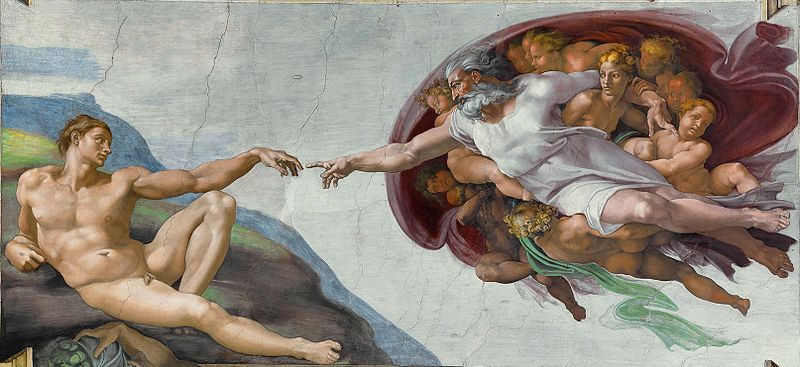
I believe in creationism. Mainly because as a Christian, the bible states that God created the world. Also, some sort of greater power had to create some kind of organism or living thing in order for there to be life. I dont believe that there was some random explosion, and then life started. There had to have been a planned way for life to be started. Even though there is no actual proof on either side, i still believe in creationism, but basically its just 'my word against yours'.
Darwin's Theory of Evolution.
Basically, this theory states that our current society is how it is today, because of previous evolutions and mutations. A process called "natural selection" is how we were brought up. (supposedly) Not from slight variations of the original species, (after reproduction) but actually an entire new species. One problem with this theory is that there is no proof as to where it all began. Also, this theory was unplanned. Supposedly, humans just evolved from previous forms of life, without any organized plan for civilized living.
Creationism.
A religious belief that explains the creation of life, earth, and the universe. This topic, just like Darwins theory, is controversial in most public places. Jews and Christians believe that an almighty God created heaven and earth, and all life. They worship this God, and believe in him as their lord and savior. Within a process of "Six days" the world was created. However, each day could be the equivalent of millions and millions of years in human time, or even a few seconds. Either way, God created everything within that time period, and now... here we are. He created all living things with an organized plan in mind for a civilized environment. The bible states that God created specific things on each day, so that at the end of the sixth day Gods plan for the world was completed, and completed in an organized manor.
I believe in creationism. Mainly because as a Christian, the bible states that God created the world. Also, some sort of greater power had to create some kind of organism or living thing in order for there to be life. I dont believe that there was some random explosion, and then life started. There had to have been a planned way for life to be started. Even though there is no actual proof on either side, i still believe in creationism, but basically its just 'my word against yours'.
Subscribe to:
Posts (Atom)


